Related Blogs
As a leading molecular sieve manufacturer, we share the latest industry news and insights on adsorbents like molecular sieves, sieve powder, and activated alumina.
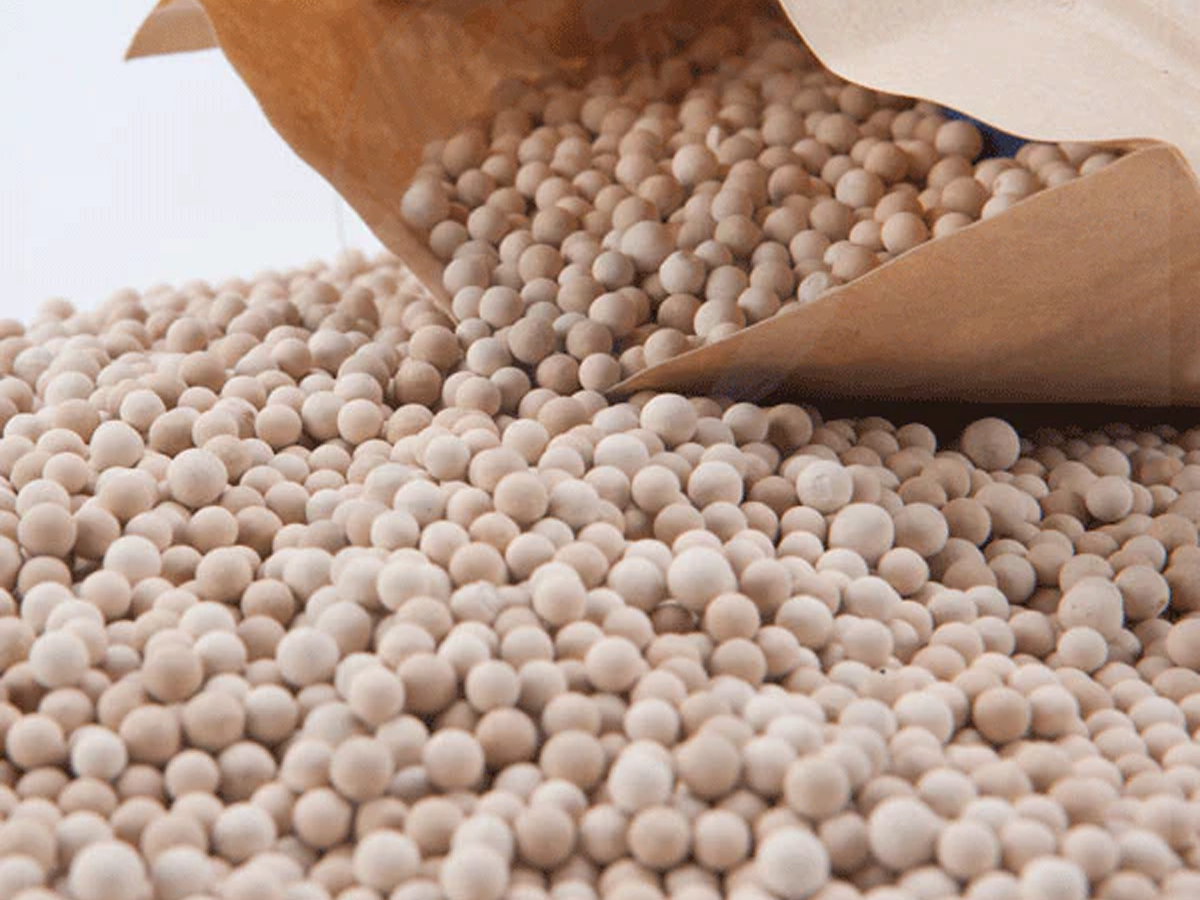
In pharmaceutical manufacturing and fine chemicals, solvent purity directly impacts drug safety, stability, and efficacy. Trace moisture can lead to drug degradation, catalyst deactivation, or unwanted side reactions, making efficient dehydration crucial. Thanks to its precise pore structure, high selectivity, and excellent regenerability, 3A molecular sieves has become the go-to material for solvent dehydration in the pharmaceutical industry. This article explores its advantages, applications, and best practices, providing reliable solutions for solvent purification.
With a pore size of ~3Å (0.3nm), 3A molecular sieves selectively adsorbs water molecules (~2.8Å) while excluding most organic solvents like methanol, ethanol, and 2-methyltetrahydrofuran (2-MeTHF). This unmatched selectivity is crucial in pharmaceutical solvent purification.
Compared to Other Sieves:
4A molecular sieve (4Å): May adsorb small solvents like methanol, leading to solvent loss.
5A molecular sieve (5Å): Adsorbs a broader range of molecules, increasing the risk of impurities.
3A molecular sieves can adsorb over 21% of its weight in water, reducing moisture content in solvents to below 1ppm (dew point <-70°C), meeting the industry’s highest purity standards.
Example: In 2-MeTHF dehydration, 3A sieve at 400g/L can lower water to 200ppm, nearly anhydrous.
No swelling or reactivity in organic solvents.
Complies with GMP requirements.
No risk of solvent entrapment or loss, unlike silica gel or alumina.
Simple regeneration via heating (200-350°C) or vacuum desorption allows hundreds of reuse cycles, reducing operational costs.
Maintains adsorption performance even in high-humidity or trace-contaminant environments.
2-MeTHF: Used in Grignard and lithiation reactions, requiring moisture below 3000ppm. 3A sieves can lower it to <100ppm.
Ethanol, Methanol: Maintains crystal form purity in pharmaceutical crystallization and extraction.
| Method | Moisture Limit (ppm) | Solvent Compatibility | Regenerability | Pharma Suitability |
|---|---|---|---|---|
| 3A Molecular Sieve | <1 | Excellent | Reusable | ★★★★★ |
| 4A Molecular Sieve | <10 | May adsorb solvents | Reusable | ★★★☆☆ |
| Distillation | ~100 | Good | Not reusable | ★★☆☆☆ |
| Silica Gel Adsorption | ~50 | Swelling possible | Partial | ★★★☆☆ |
Pre-Activation
Bake at 350°C for 4-6 hours to eliminate residual moisture.
Adsorption Conditions
Flow Rate: 0.5-2 Bed Volumes/hour (BV/h)
Temperature: Room or low temperature to enhance efficiency.
Regeneration Strategies
Thermal regeneration at 200-350°C with nitrogen purge for 3-4 hours.
For olefinic solvents, keep below 260°C to prevent polymerization.
With unmatched selectivity, deep dehydration capability, chemical stability, and cost-effective regenerability, 3A molecular sieves is the gold standard for pharmaceutical solvent purification. Whether for drug synthesis, high-purity solvent preparation, or advanced drug delivery systems, it provides a safe, efficient, and economical dehydration solution.
As a leading molecular sieve manufacturer, we share the latest industry news and insights on adsorbents like molecular sieves, sieve powder, and activated alumina.